Solar system · today
Where are the planets right now?
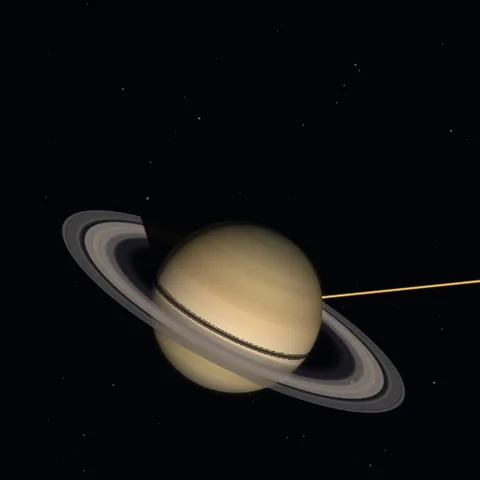
The eight planets circle the Sun in nearly the same flat plane, each at its own pace — Mercury in 88 days, Neptune in 165 years — so where each one is today, and how they line up with the Earth, changes every day. Exo-View puts each planet, the Moon, Jupiter's four big moons and Titan where they are at this moment, worked out from their orbits.
| Planet | Distance from the Sun | One orbit |
|---|---|---|
| Mercury | 0.39 AU · 58 million km | 88 days |
| Venus | 0.72 AU · 108 million km | 225 days |
| Earth | 1.00 AU · 150 million km | 365 days |
| Mars | 1.52 AU · 228 million km | 687 days |
| Jupiter | 5.2 AU · 778 million km | 11.9 years |
| Saturn | 9.5 AU · 1.43 billion km | 29.4 years |
| Uranus | 19.2 AU · 2.87 billion km | 84 years |
| Neptune | 30.1 AU · 4.50 billion km | 165 years |
Averages: the orbits are slightly oval, so each distance varies. One AU, the Earth's distance from the Sun, is about 150 million km.
Why a planet's place keeps changing
All the planets go round the Sun the same way, but at different speeds, so the inner ones lap the outer ones. The Earth overtakes Mars about every 26 months; at that moment Mars is at its nearest and brightest and is up all night, which astronomers call an opposition. When a planet is on the far side of the Sun from us it is lost in the Sun's glare and cannot be seen at all.
Which ones you can see
Five planets are bright enough to see with the naked eye: Mercury, Venus, Mars, Jupiter and Saturn, Venus and Jupiter being the brightest. Mercury and Venus stay close to the Sun, so look low in the west after sunset or low in the east before sunrise. Mars, Jupiter and Saturn are best near opposition, when they rise as the Sun sets.
Exo-View shows the system from above rather than the sky over your head, but from above it is easy to see why a planet is out of sight — the Sun lies between it and the Earth — or up all night, with the Earth between it and the Sun.
The moons
The Moon circles the Earth; Io, Europa, Ganymede and Callisto, the four big moons, circle Jupiter; and Titan circles Saturn. Each is placed where it is now, so you can see which side of Jupiter Io is on today.
Speeding it up
The clock starts at real time. Run it an hour, a day or a month a second to watch the planets sweep round — Mercury laps the Sun in a few seconds at a month a second — and press Now to come back to the present.
In Exo-View
The key below starts at the Sun, looked at whole, and from there you can fly out to any planet or moon, read its figures, and stand in Saturn's rings.
Open the solar systemSee the Milky Way